
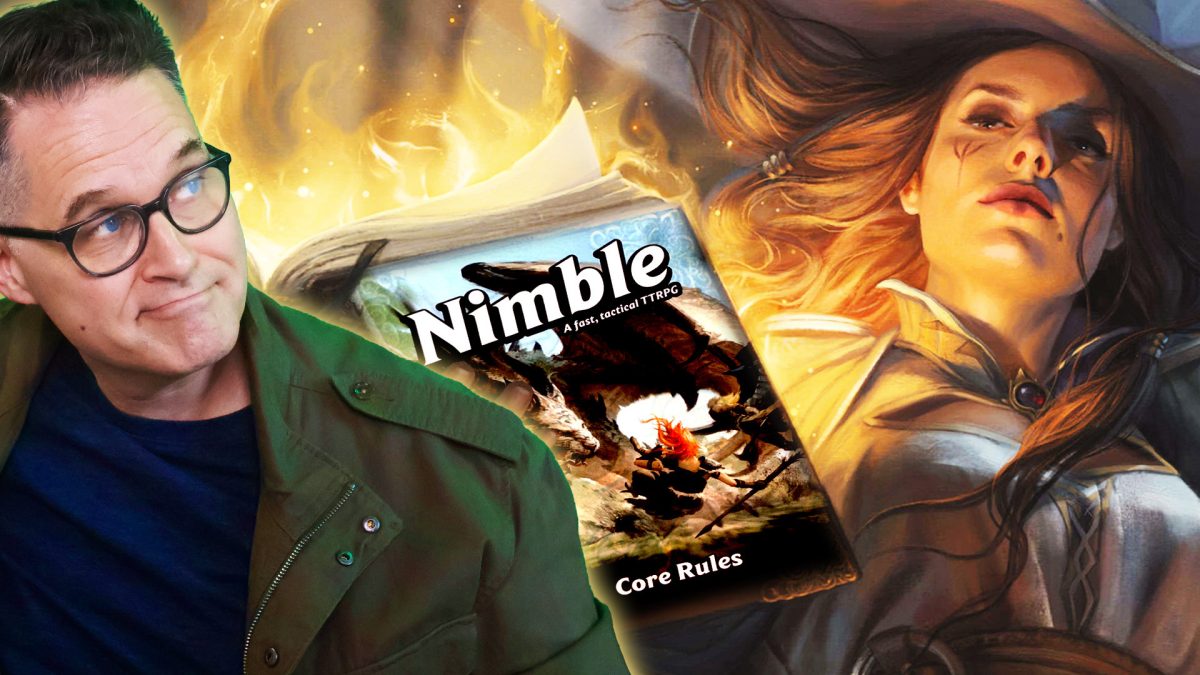
Nimble RPG Magic System Breakdown: How 76 Spells Replace 5e Bloat
If you’ve ever looked at alternative TTRPGs like Nimble, you’ve probably seen the comments. When people first look at the Nimble RPG magic system, they tend to jump to conclusions: “No enchanters or charms!”, “Do social spells just stop existing?”, or “It’s just video game magic!” Are those critiques legitimate? Or are folks missing the point of how streamlined design actually plays out at the table?
Watch the video: YouTube
Listen on the go: Apple Podcasts | Spotify
Read it here ⬇️
When you look at Nimble RPG vs 5e, the difference in scale is massive. The 5.5e Player’s Handbook features a 108-page chapter on spells. That’s longer than Nimble’s entire Heroes book. There are lmost 400 spells! Meanwhile, the Nimble RPG magic system includes 6 schools of elemental magic with 58 core spells and 18 utility spells (76 total).
On paper, going from nearly 400 spells down to 76 can feel like a letdown. But if we’re honest, most of those nearly 400 spells are just duplicates with minor flavor tweaks.
But the Nimble RPG magic system‘s streamlined approach actually creates more depth, better balance, and faster play.
1. No Choice Paralysis
In heavy spell systems, building or leveling a character usually leads to option paralysis. Most players don’t read all those spells. They just end up googling what other people think is best.
The Nimble RPG magic system eliminates that friction. Instead of tracking spell slots and resupplying resources, each spellcaster gets a mana pool based on their key stat and level. Your class determines your magic school, and your level determines your spell tier.
You don’t have to choose which individual spells you know. If your class gives you access to a school, you automatically know all the spells available to you. Because all the spells are carefully balanced, there are no trap options or mandatory “best” spells.
2. Modular Spells Pack Multiple Options into One
Instead of creating ten slight variations of the same spell, Nimble combines them into modular mechanics.
Take healing as an example. D&D has separate spells for touch healing, ranged healing, and mass healing. In Nimble, all that is packed into a single Heal spell. A Tier 1 cast heals a target you touch. If you want to heal someone 20 feet away, you can upcast by spending additional mana to extend your reach. To heal multiple targets or cure a condition like poison, you just spend more mana to scale the effect.
You get the tactical depth of choice, without all the extra paperwork.
3. Tactical Depth Through Spell Combos
Streamlined mechanics don’t mean shallow combat. In fact, Nimble builds tactical synergy directly into spellcasting through spell combos.
For example, a Mage casting Flame Dart doesn’t just deal damage on a critical hit. They inflict the Smoldering condition. Smoldering doesn’t do much on its own, but casting Ignite as a follow-up causes the target to burst into flames for 4d10 damage.
These built-in features encourage casters to layer complementary effects, bringing tactical decision-making to every turn.
4. Removing Hand-Waving to Restore Real Roleplay
Another divide in the Nimble RPG vs 5e contrast is what was purposefully left on the cutting room floor. Spells like Charm Person, Detect Thoughts, or Zone of Truth were left out for a reason. In 5e, those spells act like mechanical buttons you can just press to bypass the hard parts of story. Why investigate, negotiate, or think strategically when you can just wave your hand and remove the obstacle?
By removing hand-wavy spells, Nimble puts players in a position to interact with the narrative. You have to talk to NPCs, investigate clues, and use creative problem-solving instead of just bypassing the game itself.
Riddle of the Veiled Isles
If you are ready to bring a fast-paced, scannable adventure to your table, check out Riddle of the Veiled Isles on DriveThruRPG. It is a 1st-level module packed with traps, treasure, 8 new monsters, color-coded layouts, and GM notes designed to make running the game effortless.
Want early access to game design updates, campaign notes, and designer insights? Consider joining us over at the Adventurer’s Guild on Patreon.
If you purchase any products linked on our website, we may receive an affiliate commission.