
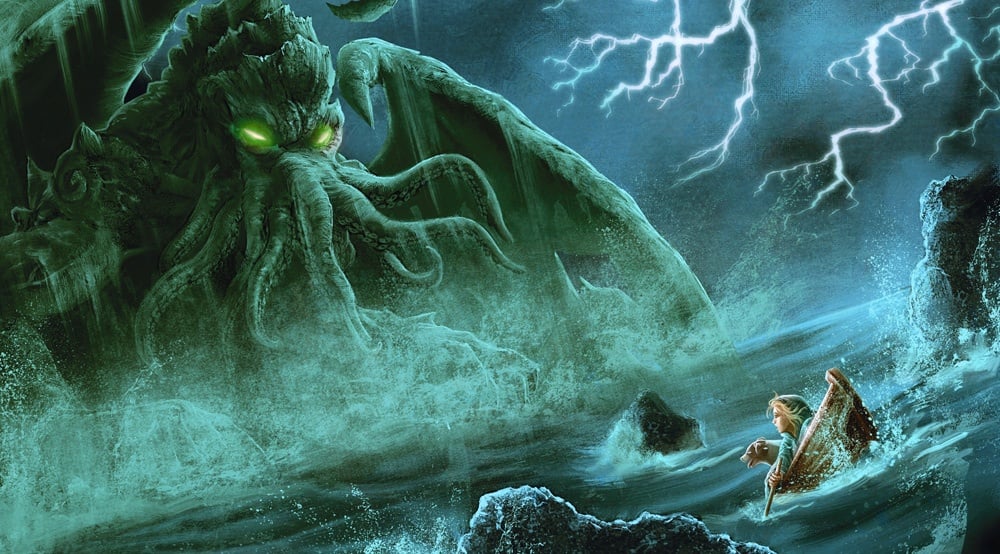
If you’ve spent your life exploring dungeons and slaying dragons, you’re used to being the hero. You have the high-level spells, the heavy armor, and the legendary loot. But what happens when you step away from the high fantasy of D&D and into the shadows of a horror TTRPG like Call of Cthulhu?
Watch the Video | Buy TTRPG Books and Accessories | More Game Content
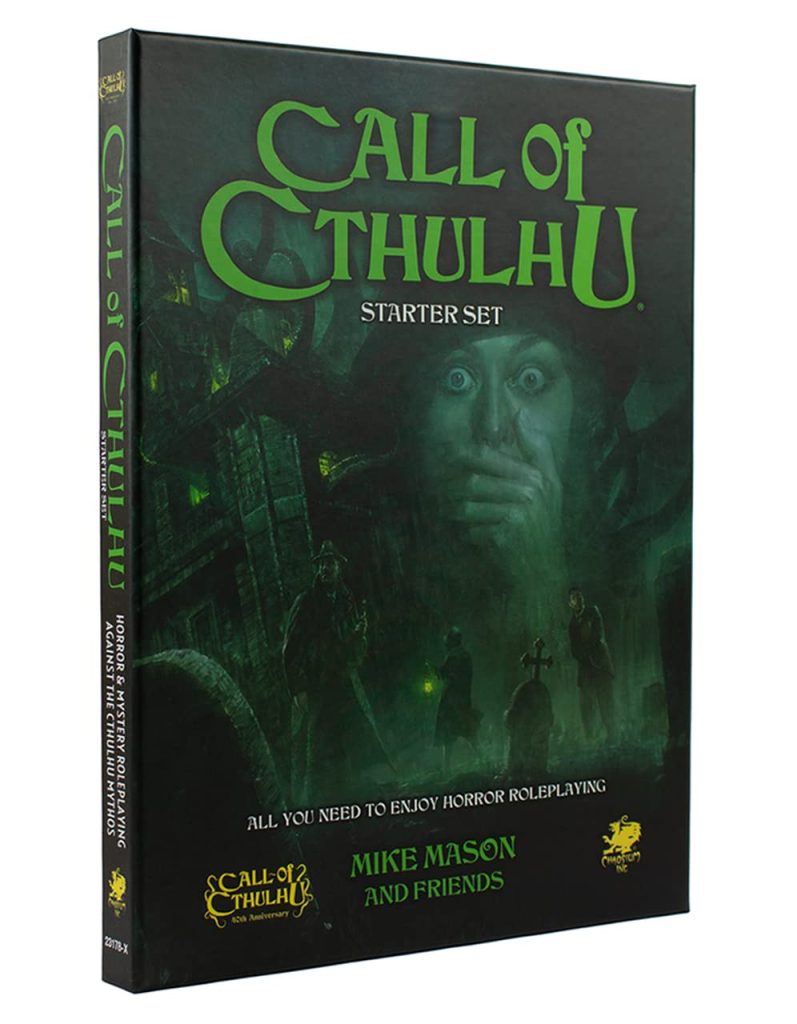
Call of Cthulhu is the classic survival horror TTRPG that plunges players into a Lovecraft-inspired 1920s world. Here, ordinary people confront mind-bending cosmic horrors and risk their sanity to uncover dark secrets. If you are looking to change up your game night, here are five reasons why Call of Cthulhu deserves a spot at your table.
1. You Aren’t a Superhero in Call of Cthulhu
In Dungeons & Dragons, even at low levels, your characters have abilities that set them apart from the average person. By high levels, you are basically a superhero. Call of Cthulhu is the exact opposite.
Your investigators are normal, everyday people drawn into terrifying situations. You are facing horrors you can’t possibly defeat in a fair fight. While D&D focuses on combat, in this system, you don’t want to fight unless you absolutely have to—because if you do, you’ll most likely die. The goal isn’t to kill monsters and level up; it’s to solve the mystery, postpone the apocalypse, and hopefully stay sane.
2. Call of Cthulhu is Skill-Based, Not Class-Based
D&D uses classes like Fighter or Wizard to determine what you can do. In Call of Cthulhu, there are no classes or levels. Instead, every character has access to a wide range of skills, from Anthropology and Sleight of Hand to Driving and Combat.
Development is also more grounded. When you successfully use a skill during a game, you mark it on your sheet. Between scenarios, you roll to see if those specific skills improve. It’s a deceptively deep way to customize a character based on what they actually do in the story.
3. The Intuitive Percentile System
While D&D relies on the D20, Call of Cthulhu uses a percentile system (D100). You always know exactly what you need to roll because you are trying to roll under your skill score.
- Normal Success: Roll your score or lower.
- Hard Success: Roll half your score or lower.
- Extreme Success: Roll one-fifth of your score or lower.
It may sound technical, but in practice, it’s incredibly easy to learn. You always know your odds of success just by looking at your sheet.
4. Built for Mystery and Horror
Running a mystery in D&D can be tough because high-level magic often bypasses the investigation entirely. Call of Cthulhu is built specifically for psychological horror and investigation.
The system includes “Sanity Checks,” where witnessing something horrific forces you to roll against your sanity score to see if you lose your mind. Furthermore, failure in this game isn’t just a dead end—it’s an opportunity. Failing a roll often creates a new branch in the narrative, forcing players to think outside the box.
5. The Stakes Are Incredibly High
In many modern RPGs, characters are hard to kill. You have death saves and resurrection spells to keep the story going. In Call of Cthulhu, there is no resurrection. Every encounter with the mundane or the supernatural has the potential to end your character’s life or mind. When you’re dead, you’re dead. This creates a level of tension that high-fantasy games rarely match.
One Quick Warning
If there is one downside, it’s that Call of Cthulhu can be harder to GM (or “Keep”) than D&D. Because the game relies on branching storylines and investigative leads rather than a linear path of combat encounters, the Keeper has to hold a lot of moving parts in their brain. However, for the depth of roleplay it provides, it is well worth the challenge.
Watch the Video | Buy TTRPG Books and Accessories | More Game Content
If you purchase any products linked on our website, we may receive an affiliate commission.